 Scott Wintrip, author of High Velocity Hiring, discusses a range of hiring and cultural issues around creating a high performance team. He explains that instead of hiring when an opening occurs, leaders should know their ideal candidate profile, and interview ideal candidates continually. This builds relationships and keeps high potentials in a hiring inventory pipeline, and ready for a position when it comes open.
[2:25] In our fast-paced world, the adage about being slow to hire is wrong. An empty seat is an open wound. The manager has to do their own role, the work of the empty seat, and the work of hiring someone to fill it. A manager doing three jobs is hiring while distracted. We need people readily available to power companies. The first job of leadership is hiring a quality team to lead.
[5:51] Build an inventory over time by seeking referrals, having conversations, interviewing the best, and using them to fill positions in a continuing process to stockpile people who are ready as you need them. This takes half the time of rushing to fill an open spot.
[11:00] Scott suggests using a hands-on interview where real sample work is completed. This circumvents the ‘tell, sell, and swell,’ of a normal interview and it begins the assessment process. Top talented candidates don’t enjoy a drawn-out multiple-interview process. They appreciate this process of looking ahead and being ready to work together when the time is right. It’s cultivating a relationship.
[15:14] Start with a ‘hire-right profile,’ of a list of deal makers, deal breakers, boosts, and blocks. Know the candidate you want, before you start looking. Then talk to and interview people who fit the profile and do some hands-on work with them, looking ahead to future openings. Candidates will last for months or years in your inventory if they think you will be the right company for them.
[19:27] Companies with a great brand can afford a grueling hiring experience, for a while, but turnover is high at those companies. Loyalty is earned through culture. Recruit from those companies whose employees are looking around.
[29:26] Scott has always looked for things he wasn’t doing well to try to find a way to do them better. Early in Scott’s hiring career, he found he was a bad interviewer, so he decided to do the exact opposite of what he was doing, as a starting point. That started Scott on the path to hands-on interviewing. His passion comes from improving himself on his entrepreneurial journey. His transparency is relatable.
[36:21] Find your hire-right profile in a four-quadrant grid. Upper left is Must Haves. Upper right is Must Not Haves. Lower left is Boosts. Lower right is Blocks. Think of people who have succeeded in the role. List their commonalities as Must Haves. Think of people who were unfit for the role. List their commonalities as Deal Breakers. Then add ideal qualities and negative aspects in the bottom quadrants.
How to contact Scott:
Website: HighVelocityHiring.com
Twitter: @ScottWintrip
LinkedIn: Scott Wintrip
Email: Scott@ScottWintrip.com
Website: Wintrip Consulting Group
SHRM: “6 Steps to Move Hiring Out of the Slow Lane,” by Scott Wintrip
Fast Company: “The Deceptively Simple Type of Question Every Interviewer Needs to Know,”
by Scott Wintrip
Forbes: “You’re Hired: High Velocity Hiring Techniques,” by Kevin Kruse
ABC: “How to nail down the job of your dreams without breaking a sweat, with Scott Wintrip”
“Adages are called old adages for a reason — because they’re old and they’re tired and they often don’t work.”
“We need people readily available because people power companies.”
“All great leadership starts with picking the right people with whom you surround yourself.”
A couple hours of calling and interviewing a month allow you to stockpile people who are ready-to-hire.
“Building inventories takes half the time, compared to conventional ways of reacting to an open job.”
A sales pipeline and a hiring pipeline are really the same. You want to nurture and progress the prospect along the way.
“We sell the best parts of ourselves. … That’s not a very good indicator of whether or not somebody’s a fit.”
“Candidates love a ‘red carpet’ experience; they loathe the ‘Survivor-like’ interviewing experience.”
Good leaders want career seekers who look ahead, not job hunters focused on the present.
“Companies can live on their brand for a while when it comes to hiring, but it doesn’t last forever.”
“Our best lessons come from our mistakes and how we respond to those mistakes.”
Engage with people instead of imposing upon them. Say, this is what we going to do, and this is why. How will we do it?
“Every day I find something new about myself that I didn’t know and that’s pretty doggone cool.”
“I’m a recovering perfectionist, as a lot of the leaders are.”
Bio
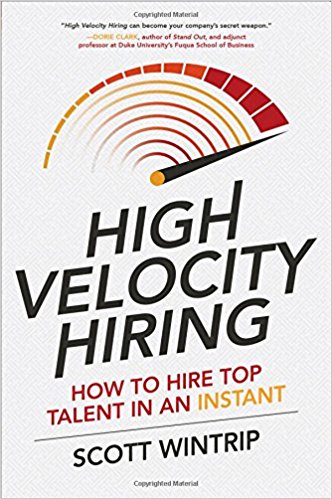
Scott Wintrip eliminates hiring delays by helping organizations across the globe implement a process to fill jobs the moment they become open. He’s the author of High Velocity Hiring: How to Hire Top Talent in an Instant (McGraw-Hill).

These are the books mentioned in Scott’s episode


Recent Comments