• Home
  • Episodes
  • Books for Leaders
  • About Us
    • Our Team
    • Contact Us
  • Our Sponsors
  • Blog
  • Our Newsletter
The Leadership Podcast

The Leadership Podcast

We Study Leaders

December 28, 2022

TLP339: The Beauty of the Game

https://traffic.libsyn.com/secure/theleadershippodcast/TLP_339.mp3
Play in New Window Download

Mano Watsa is the President and Owner of PGC Basketball, the largest educational basketball camp in the world. PGC Basketball has taught over 125,000 players and coaches how to be leaders on and off the court. Mano brings his sports and business experiences to the podcast with stories and advice on thinking like a coach, communicating, and making a difference in people’s lives. Listen to learn how to focus on the thing you can do best. 

“Part of the beauty of the game is your individual contributions combined with working together as a team … where five players become like a fist, not five individual fingers … and they play together as one.” 

– Mano Watsa

Key Takeaways

[2:51] Mano’s journey has been a joy, but anytime you’re pursuing a vision, there are all sorts of challenges along the way, as well as opportunities. It’s often the challenges that don’t surface publicly. Mano has never seen a successful team or individual that has not had to overcome adversity, and he is no different.

[4:20] PGC Basketball’s founder, Dick DeVenzio, who played college basketball at Duke University and went on to play and teach the game across the world, created the Point Guard College with the point guard in mind. The point guard has to be the coach on the floor. They have to be able to run the show for their team and get their team to work together and play together. They have to “think the game.”

[5:01] PGC teaches players to be the smartest player on the floor by equipping them with how to think like a coach, how to make good decisions that lead to winning basketball, and how to lead their team. Jan and Jim recall guest Sam Walker’s book, The Captain Class, on how the greatest sports teams in history have one thing in common, captains who were the coach on the floor.

[6:13] Mano says PGC teaches players not only how to lead by example but to be effective communicators, inspire their teammates, hold teammates accountable, challenge them, and raise the standard for their teammates. Anyone leading a company, team, or family, is the point guard for that company, team, or family.

[8:23] Jeremy Lin came to the NY Knicks and started the Linsanity era. Overnight Jeremy Lin was on the cover of nearly every magazine and was a household name as the first Asian-American in the NBA. Suddenly he’s scoring 38 points against Kobe Bryant at Madison Square Garden. He had a successful 10-year NBA career.

[9:08] Toward the end of Jeremy Lin’s NBA career, Mano had the privilege and opportunity to support him in the realm of mindset and his approach. Mano has been inspired by Jeremy Lin’s story, his passion, and his commitment to the game, giving back to the game and making a difference in the world. Jeremy Lin is now playing professionally in China.

[10:18] John Wooden won 10 national championships at UCLA and was named Coach of the Century. John Wooden epitomized what it means to be a coach and make a difference in the lives of young players. Mano and his business partner at the time, Dena Evans, had the privilege once of spending a remarkable morning with Coach Wooden. They immediately wrote down all they had learned from him.

[12:30] Jason Sudeikis revealed that having John Wooden’s Pyramid of Success on the wall of Ted Lasso’s office is purposeful.

[13:30] Five players that work together can be more effective than five talented individuals who don’t work together. Individual performers can significantly influence the outcome of the game, but they also depend on the performance of their teammates to determine the outcome of the game. It’s a beautiful thing to see players willing to pass up a good shot for themselves for a great shot for a teammate.

[15:38] Michael Jordan was the best player in the world. His teammates said they found it difficult to play with him because his standards were so high. He had competitive greatness. He was at his best when it was needed the most. It’s helpful on a team to have a player that drives everyone toward winning. You need others who complement that person’s nature to make sure everyone gets along.

[19:30] Mano helped the Mully Children’s Family organization in Kenya build a sports gymnasium. There are over 2,000 children under their care. Mano has been over there with them multiple times and loves their work. When he sees where these kids have come from and their optimism, even with what they lack, it gives Mano a perspective of gratitude and wanting to make a difference in the lives of others.

[21:05] Denny Crum, former coach of the University of Louisville, was honored recently. One of his players stated that they never saw him get upset. He never yelled at his players. They called him Cool Hand Luke. He was always encouraging and supportive. He was a teacher to his team.

[22:01] PGC founder Dick DeVenzio taught to use a six-to-one ratio of encouragement to constructive criticism. It’s a lofty standard. As a coach or leader, it’s so easy to see where others may be falling short but people thrive off encouragement. Connect with team members before correcting them. Always make deposits before you make withdrawals. As leaders and parents, think about the “bank account.”

[24:15] Great coaches don’t try to make everything a priority. If you try to make everything a priority, nothing is a priority. You can’t be great at everything, on the court or in business. But you can be great and world-class in something. You have to let some things go and focus on others.

[25:02] Great coaches don’t single players out unnecessarily. This goes for leaders and parents, too. Praise publicly and criticize privately. Good coaches and business leaders do a good job of not embarrassing and humiliating their people. They praise publicly and if they have to give criticism, they do so quietly and privately.

[25:43] Great coaches don’t hold back when they’re wrong. They’re willing to admit mistakes. That takes humility and vulnerability, in practice and games. Get beyond your ego. Be willing to admit you don’t have it all together.

[26:56] At PGC, they follow a commitment-based culture. Part of Mano’s commitment statement is that he’s a joyful work in progress. Accepting himself as a joyful work in progress allows Mano to admit mistakes and admit that he will always be a work in progress.

[27:38] Past guest, Michael Bungay Stanier, told of a Legos bridge-building problem. Most people added pieces to solve the problem but the most expedient solution was to remove a piece. What’s on your plate? What are you going to take off your plate? Mano notes that when we say “yes” to something, we say “no” to every other alternative. That helps him to be discerning about what he says “Yes” to.

[29:18] Mano decided recently that if it’s not a “Hell, yeah!” it’s a “No.” One of the mistakes Mano made in the early years of growing PGC was wanting to pursue every opportunity. In attempting to pursue every opportunity, they didn’t maximize any given opportunity. Mano learned as he grew as a leader to stop good things to focus on a great thing.

[31:54] As coaches or business leaders, you can’t give all the encouragement that your players or staff need. To fill the gap, PGC introduced celebrations. Every staff meeting, no matter how many meetings are in a day, starts with 60 to 90 seconds of gratitude. It’s an opportunity for somebody to acknowledge a thing or project that the team or an individual has done well. People encourage each other.

[34:50] Mano frequently tells his staff, “If you’re winning at work but losing at home, you’re losing.” Mano and PGC care about the staff as human beings and want them to win at home. If someone is not winning at home, their work will be compromised because everything bleeds over. When you’re at home, shut off work, slow down, and be present with family.

[36:04] After reading In Praise of Slowness, Mano stopped college coaching to focus on PGC. He wanted to be present for his family. Another decision he made with his family was to limit the participation of their children in sports and activities. Their highest value was in spending dinner time together as a family and playing together. They prioritized family time over competitive sports.

[39:02] Mano’s listener challenge: As business leaders, we must ensure that we’re doing everything possible to support our employees and teams. One of the ways we can do that is by helping to ensure that they’re able to bring their best possible selves to work each day.

[39:24] For employees to bring the best version of themselves, they need to feel cared for, supported, and encouraged, and they need to be given space because if we’re just driving them hard all the time, we’re going to wear them down, especially in this world where many people just don’t feel settled. We can create a good environment while pursuing goals and lofty objectives and still helping our people.

[41:21] Closing quote: Remember, “Do not let what you cannot do interfere with what you can do.” — John Wooden


The Leadership Podcast is sponsored by W.S. Darley & Company.  

Founded in 1908, Darley remains a family owned and operated business, providing the highest quality equipment solutions to our country’s warfighters and firefighters.  

Learn more at darley.com and darleydefense.com


Quotable Quotes

“I’ve never come across a winning team, or anyone who’s been highly successful in anything, that hasn’t had to overcome significant adversity. And I’m certainly no different than that, in terms of adversities.” — Mano Share on X “We like to think that a point guard isn’t just a position on a basketball court. Somebody leading a company is the point guard of their team. A quarterback is the point guard of their football team. … If you’re leading a family,… Share on X “The point guard has to be able to influence behavior in order to get desired outcomes. They have to be able to lead and communicate effectively.” — Mano Share on X “The beauty of the game [of basketball] is that five players who work together can be more effective and more successful than five talented individuals who don’t work together.” — Mano Share on X “In basketball, it’s a small enough team that you can significantly impact the outcome of the game by your individual performance but you can’t entirely impact the outcome because you have to be dependent on your teammates.” — Mano Share on X “Part of the beauty of the game is your individual contributions combined with working together as a team … where five players become like a fist, not five individual fingers … and they play together as one.” — Mano Share on X “There are so many life lessons that come out of the game when players are willing to put aside their individual agendas for the betterment of the team.” — Mano Share on X “You need a range of diverse personalities to really make a team as effective as it can be. But to have somebody that drives winning and drives outcomes is really, really valuable.” — Mano Share on X “People thrive off encouragement. No one has ever received too much appreciation or too much encouragement. And one of the principles that we teach to coaches … is connect before you correct.” — Mano Share on X “Every good leader … looks for opportunities to celebrate, to acknowledge, to praise, to encourage, and appreciate far more often than they do providing any constructive criticism.” — Mano Share on X “It actually builds trust when we’re willing to be vulnerable when we’re willing to demonstrate that level of humility. It’s hard because it requires getting beyond ourselves and it requires getting beyond our ego.” — Mano Share on X “One of the things I’ve realized, both in business and in my personal life: I just don’t have it all together.” — Mano Share on X “When we say ‘yes’ to something, we’re actually saying ‘no’ to every other possible alternative.” — Mano Share on X “If it’s not a ‘Hell, yeah!’ it’s a ‘no.’” — Mano Share on X “What gets scheduled gets done." Share on X
Mano Watsa

These are the books mentioned in our discussion with Mano

The Captain Class: A New Theory of Leadership

Buy This Book Online
Buy from Amazon
The Captain Class: A New Theory of Leadership
Buy now!
The Captain Class: A New Theory of Leadership

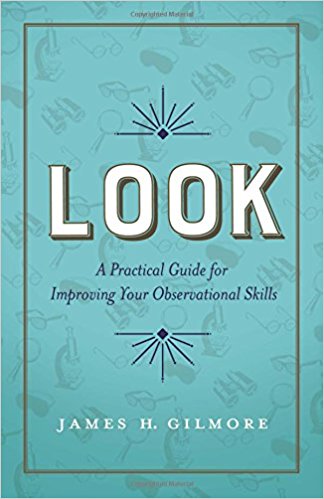
Look: A Practical Guide for Improving Your Observational Skills

Buy This Book Online
Buy from Amazon
Look: A Practical Guide for Improving Your Observational Skills
Buy now!
Look: A Practical Guide for Improving Your Observational Skills

In Praise of Slowness: Challenging the Cult of Speed

Buy This Book Online
Buy from Amazon
In Praise of Slowness: Challenging the Cult of Speed
Buy now!
In Praise of Slowness: Challenging the Cult of Speed

Resources Mentioned

  • Sponsored by: Darley.com
  • Rafti Advisors. LLC
  • Self-Reliant Leadership. LLC
  • Mano Watsa
  • PGC Basketball
  • Dick DeVenzio
  • The Captain Class: The Hidden Force That Creates the World’s Greatest Teams, by Sam Walker
  • Jeremy Lin
  • NY Knicks
  • John Wooden
  • VIP’s Cafe
  • John Wooden’s Pyramid of Success
  • Ted Lasso
  • Michael Jordan Documentary The Last Dance on Netflix
  • Michael Jordan
  • Phil Jackson
  • Look: A Practical Guide for Improving Your Observational Skills, by James H. Gilmore
  • The Mully Children’s Family
  • Denny Crum and Louisville Basketball
  • Michael Bungay Stanier
  • In Praise of Slowness: Challenging the Cult of Speed, by Carl Honore

Filed Under: Podcast Tagged With: athletics, basketball, interview, leadership, sports, teamwork

TLP338: Trust and the Virtual Team
TLP340: An Entrepreneurial Journey from Hangr...

Related Posts

  • TLP069: How A Navy SEAL Became a Rear Admiral
  • TLP370: Doorway of Possibilities with Solomon R.C. Ali
  • TLP382: The Power of Conscious Connection with Talia Fox
  • TLP351: Coaching for Performance
  • TLP109: You Have To Cut Out The Noise
iTunes
Spotify
Audible
SoundCloud
iHeartRADIO

Instagram Feed

westudyleaders

#leadership #leadershiptraining #leader #westudyleaders

Being good at something can make you worse at maki Being good at something can make you worse at making decisions.The more experience and expertise we gain, the easier it can become to trust our judgment without questioning it.David Robson calls this the "curse of expertise."He argues that good judgment requires something that doesn't always come naturally to smart, experienced people: actively looking for evidence that challenges what we already believe.In our conversation, we explore what that looks like in leadership, along with the role of curiosity, vulnerability, communication, and self-compassion in becoming more effective.Listen to the latest episode of The Leadership Podcast.#leadership #leadershipdevelopment #decisionmaking #leadershippsychology #cognitivebias #executiveleadership #selfawareness #davidrobson
A leader's mindset doesn't always stay with the le A leader's mindset doesn't always stay with the leader.David Robson explains how negative expectations can spread through an organization. When leaders signal that they don't have much faith in someone's capability, that person can begin to internalize the message. Anxiety rises. Confidence falls. And the mental space that should be used for creativity and problem-solving gets consumed by doubt.Sometimes leadership isn't about what you say to someone.It's about what your behavior tells them you believe they are capable of.#leadership #leadershipdevelopment #leadershippsychology #teamculture #employeeengagement #selfefficacy #davidrobson #leadershippodcast
Leadership creates a difficult tension. Leaders ha Leadership creates a difficult tension. Leaders have to develop their people while also making sure their time is going toward the work only they can do.The challenge is that developing people isn't a one-time task. It requires continued support, appreciation, and attention.The work of leadership is figuring out how to do both, and when each requires your attention.#Leadership #LeadershipDevelopment #LeadershipLessons #TimeManagement #PeopleLeadership #TheLeadershipPodcast
There's a formula to building bravery. Jill Schulm There's a formula to building bravery. Jill Schulman, bravery expert and Marine Corps veteran, breaks down the three-stage framework. Stage one: master your mindset. Shift from fixed to growth. Stage two: take action before you feel ready. Confidence comes after, not before. Stage three: curate your tribe. Surround yourself with people who won't let you quit. The genius part? They reinforce each other. Each stage amplifies the next. Master the three-stage formula. https://bit.ly/TLP-YT-518?utm_campaign=coschedule&utm_source=instagram&utm_medium=westudyleaders#bravery #leadershipdevelopment #personalgrowth #framework #mindset #courage #leadership #psychology
Most people wait until they feel ready before taki Most people wait until they feel ready before taking action. Jill Schulman's research in positive psychology proves that's backwards. Confidence doesn't come first. Action does. Every time you move forward despite fear, you're building the neural pathways that create real confidence. Move forward before you feel ready.Discover why action comes first. https://bit.ly/TLP-518?utm_campaign=coschedule&utm_source=instagram&utm_medium=westudyleaders#bravery #leadershipdevelopment #personalgrowth #psychology #fearless #confidence #mindset #actiontaker
Great leadership doesn't require charisma. David Great leadership doesn't require charisma.David Robson points to two qualities that matter when influencing other people: warmth and competence.Can people trust you? Do they believe you know what you're talking about?That combination matters more than being naturally charismatic, entertaining, or a great orator.And unlike charisma, these are qualities leaders can deliberately develop.#leadership #leadershipdevelopment #influence #executiveleadership #trust #communication #leadershippsychology #davidrobson #leadershippodcast
Most leaders treat ethics as a cost. Patrick Ryan Most leaders treat ethics as a cost. Patrick Ryan says that's backwards. Morality isn't friction. It's the lubricant that makes markets actually function. Without it, you don't have capitalism. You have extraction. This is what modern business gets fundamentally wrong—and how it shifts everything about how you lead.Watch the full conversation. https://bit.ly/TLP-YT-519?utm_campaign=coschedule&utm_source=instagram&utm_medium=westudyleaders#capitalism #ethics #leadership #adamsmith #moralcapitalism #businessethics #leadershippodcast #virtuouscapitalism
Patrick Ryan names the practice most leaders never Patrick Ryan names the practice most leaders never do. Before you decide. Before you send that email. Before you justify it to yourself. Take a step back. Ask: What would a knowledgeable, impartial observer think of this? That's the impartial spectator. It's not philosophy. It's a daily tool. One question. Applied consistently. It changes everything.Watch the full episode. https://bit.ly/TLP-YT-519?utm_campaign=coschedule&utm_source=instagram&utm_medium=westudyleaders#leadership #ethics #decisionmaking #adamsmith #leadershippodcast #corporateethics #executiveleadership #virtuouscapitalism
Only 7% of families fit the old nuclear mold. Le Only 7% of families fit the old nuclear mold. Lee Benson says that this changes how leadership works at home. Modeling healthy behavior is a leadership skill. So is modeling a healthy relationship between parents. On this episode of the leadership podcast, Lee Benson breaks down why 82% of families are blended today and why modeling matters more than ever.#leadership #parenting #leadershippodcast #familyleadership #blendedfamily #leebenson #modeling #leadershipdevelopment
Most leaders blame the market, the deal, or the te Most leaders blame the market, the deal, or the tech when things fall apart.David Craig says look closer. The system is usually the real problem.David is the former CEO of Refinitiv and author of the Blue Book on business transformation and growth, having led a 25,000-person company through the financial crisis, Brexit, and Covid.This episode breaks down how to spot complexity killing your organization before it's too late, and what real conviction looks like when leading people through change.New episode is live now. https://bit.ly/TLP-525?utm_campaign=coschedule&utm_source=instagram&utm_medium=westudyleadersWatch it on YouTube - https://bit.ly/TLP-YT-525?utm_campaign=coschedule&utm_source=instagram&utm_medium=westudyleaders#leadership #leadershippodcast #theleadershippodcast #businesstransformation #executiveleadership #organizationalculture #changemanagement #ceointerview #leadershipdevelopment #davidcraig
Patrick Emmons wasn't a great student. He'll tell Patrick Emmons wasn't a great student.He'll tell you that himself.But he's built and sold three companies over 25 years.His point: the hero story isn't the requirement people think it is.Hear Patrick's full story on episode 524. https://bit.ly/TLP-524?utm_campaign=coschedule&utm_source=instagram&utm_medium=westudyleaders#leadership #entrepreneurship #growthmindset #careeradvice
You can talk about work-life balance all day. You You can talk about work-life balance all day.Your team is watching what you actually do.Tom Rath says most leaders preach rest and recovery, then model the opposite. First in. Last out. Never fully off.If you want a well-rested team, be the first one to log off.Listen to Tom Rath's full conversation on the show. https://bit.ly/TLP-523?utm_campaign=coschedule&utm_source=instagram&utm_medium=westudyleaders#tomrath #leadershippodcast #leadingbyexample #executivecoaching #workplaceculture #burnoutprevention #leadershipmindset #peoplefirstleadership
Chasing the next promotion isn't the same as chasi Chasing the next promotion isn't the same as chasing the next skill.David Craig watched talented people burn years climbing a ladder instead of building capability, and he says it's one of the costliest mistakes in a career.The shift is simple: choose the work that develops you, not just the title that impresses others.Hear David explain the lesson behind it in episode 525. https://bit.ly/TLP-525?utm_campaign=coschedule&utm_source=instagram&utm_medium=westudyleaders#leadership #davidcraig #careeradvice #leadershipdevelopment #leadershippodcast #careergrowth #executivecoaching #professionaldevelopment
Everyone rushes to answer. That's why their answe Everyone rushes to answer.That's why their answers fall flat.Here's what Murshad Chowdhury teaches in his debate and communication training: pause."Let me think about that for a few seconds."That's not a weakness. That's clarity.It's the difference between a half-thought answer and a fully formed response.Master this in interviews, presentations, and conversations. https://bit.ly/TLP-YT-515?utm_campaign=coschedule&utm_source=instagram&utm_medium=westudyleaders#publicspeeking #interviewtips #communicationskills #presentationskills #executivepresence #theleadershippodcast #careertips #leadershipskills
Most leaders treat growth like a race. Joth Ricci Most leaders treat growth like a race.Joth Ricci treats it like a marathon.When you scale too fast, something breaks. The question isn't IF—it's WHAT.He managed Dutch Bros from 27 locations to 92 in three years without losing the culture. Here's the principle that made it possible.See how he scaled: https://bit.ly/TLP-YT-516?utm_campaign=coschedule&utm_source=instagram&utm_medium=westudyleaders#scaling #leadership #organizationalculture #businessgrowth #leadershiplessons #dutchbros #westudyleaders #theleadershippodcast
There is a difference between improving what alrea There is a difference between improving what already exists and imagining what could exist.Ron Johnson reflects on what Steve Jobs saw in him: not only someone who understood retail and customers, but someone willing to imagine something that hadn't been done before.Innovation often begins with the willingness to think beyond the familiar.#Innovation #Leadership #SteveJobs #RonJohnson #ThinkDifferently #InnovationLeadership #LeadershipLessons #TheLeadershipPodcast
Most people treat networking like a numbers game. Most people treat networking like a numbers game.Donnie Boivin treats it like a business model.The shift from collecting contacts to building other people's success is what actually opens doors.Hear how he built an entire company around it in this week's episode. https://bit.ly/TLP-521?utm_campaign=coschedule&utm_source=instagram&utm_medium=westudyleaders#networking #leadership #businessdevelopment #relationshipbuilding #salesmindset #entrepreneurship #leadershippodcast #b2bsales
Everyone hits hard seasons. Not everyone responds Everyone hits hard seasons. Not everyone responds to them the same way.Lee Benson has survived health crises, financial setbacks, and a rough start most people never recover from.His reframe: every setback either builds you or defines you. You choose which.Hear how Lee turned his hardest years into his biggest advantage. #resilience #leadership #leebenson #mindset #growth #familyleadership #executivecoaching #podcast
Your circle isn't static. It's a decision. Donnie Your circle isn't static. It's a decision.Donnie Boivin says your five prospects, five clients, and five closest people all shape where you plateau.Not walking away from anyone, just paying attention to who's actually pulling you forward.Dive deeper into the full conversation https://bit.ly/TLP-521?utm_campaign=coschedule&utm_source=instagram&utm_medium=westudyleaders#leadership #networking #personalgrowth #businessmindset #relationshipbuilding #entrepreneurship #leadershippodcast #successmindset
Kim Svoboda was on a plane 85% of the time. Chasin Kim Svoboda was on a plane 85% of the time. Chasing the job title she thought she wanted.Then a simple values exercise stopped her cold. Family was #1 on her list. She wasn't living anywhere near it.That gap is what most leaders never stop to check.Hear what broke her wide open. https://bit.ly/TLP-YT-522?utm_campaign=coschedule&utm_source=instagram&utm_medium=westudyleaders#boldleadership #kimsvoboda #executiveburnout #leadershipvalues #worklifebalance #careertransition #leadershippodcast #intentionalleadership
Follow on Instagram

Recent Posts

  • TLP531: Tribalism, Belonging, and the Leader’s Role
  • TLP530: Leadership Lessons from Building the Apple Store with Ron Johnson
  • TLP529: How Steve Jobs Learned to Lead with Geoffrey Cain
  • TLP528: The Beliefs That Shape Success with Shawn Achor
  • TLP 527: The Intelligence Trap: Why Smart Leaders Make Bad Decisions

Recent Comments

  • Anonymous on TLP519: The Leadership Idea We Missed for 250 Years
  • Anonymous on TLP513: The Leadership Cost of Isolation with Nick Black
  • Anonymous on TLP511: What 500 Top Leaders Taught Us — And Why It’s Not What You Think
  • Anonymous on TLP508: Your Scars Are Your Resume
  • Anonymous on TLP505: Why Leadership Coaching So Often Fails

Tags

adaptability assumptions athletics business change coaching communication corporate crucible culture Curiosity decision making education emotional intelligence entrepreneur Executive Coaching financial history humor innovation interview Jan Rutherford Jim & Jan Jim Vaselopulos leader leadership leadership development Leadership Podcast military neuroscience Personal Growth philosophy practitioner productivity relationships resilience speaker sports stories team development teamwork thought leader trust veterans workplace culture

Copyright © 2026 Rafti Advisors, LLC & Self-Reliant Leadership, LLC - All Rights Reserved. | Privacy Policy