• Home
  • Episodes
  • Books for Leaders
  • About Us
    • Our Team
    • Contact Us
  • Our Sponsors
  • Blog
  • Our Newsletter
The Leadership Podcast

The Leadership Podcast

We Study Leaders

Brady Pyle

These are the books mentioned in this episode

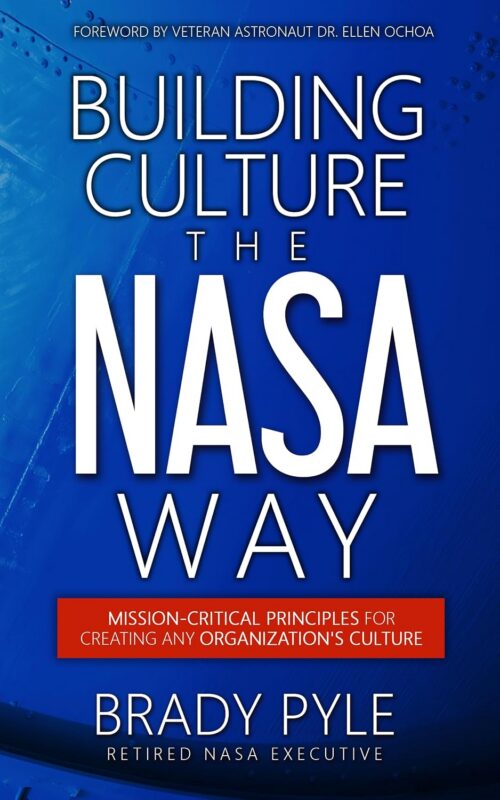
Building Culture the NASA Way: Mission-Critical Principles For Creating Any Organization’s Culture

Buy This Book Online
Buy from Amazon
Building Culture the NASA Way: Mission-Critical Principles For Creating Any Organization’s Culture
Buy now!
Building Culture the NASA Way: Mission-Critical Principles For Creating Any Organization’s Culture
iTunes
Spotify
Audible
SoundCloud
iHeartRADIO

Instagram Feed

westudyleaders

#leadership #leadershiptraining #leader #westudyleaders

Leaders often treat self-criticism as if it were a Leaders often treat self-criticism as if it were a tool for improvement.David Robson argues the opposite. When we constantly criticize ourselves, we create stress that clouds our thinking and makes positive change harder. Self-compassion doesn't mean ignoring mistakes or lowering your standards. It means acknowledging what went wrong without turning the mistake into a judgment about who you are.That distinction matters.You can hold yourself accountable without tearing yourself apart.#leadership #selfcompassion #selfawareness #leadershipdevelopment #leadershippsychology #resilience #davidrobson #leadershippodcast
Chasing success can quietly become the problem, no Chasing success can quietly become the problem, not the solution.Tom Rath argues usefulness matters more than achievement, and the shift changes how you spend every hour of your day.It's a simple reframe with a big payoff: less hamster wheel, more contribution.Listen to Tom Rath's full conversation on the show. https://bit.ly/TLP-523?utm_campaign=coschedule&utm_source=instagram&utm_medium=westudyleaders#tomrath #leadershippodcast #purposeoverperformance #leadershipmindset #executivecoaching #findingpurpose #workplaceculture #meaningfulwork
Transparency is important in leadership, but more Transparency is important in leadership, but more disclosure isn't always better.Uma Subramanian discusses the responsibility leaders have to disclose relevant conflicts or competing motives. She also points out that sharing everything with everyone isn't necessarily helpful.Her test is whether the information serves the people receiving it.That distinction matters. Good communication isn't measured by how much a leader reveals, but by whether people have the information they need to understand the situation and make informed decisions.Listen to Uma Subramanian on The Leadership Podcast. Link in the first comment.#Leadership #Transparency #Trust #LeadershipCommunication #TheLeadershipPodcast
The most dangerous thing on a high-stakes team is The most dangerous thing on a high-stakes team is the concern nobody says out loud.Brady Pyle, Chief HR and Inclusion Officer at Space Center Houston and author of Building Culture the NASA Way, draws on nearly 30 years at NASA, including a role as Deputy Chief Human Capital Officer and two Outstanding Leadership Medals, to explore how organizations make it safe to speak up.The conversation covers what NASA changed after the Columbia accident, why technical concerns need their own chain of authority, and how an ombuds office gives people another path to raise issues. Brady also shares the Lean Forward, Fail Smart award and why he asks leaders to name their Mount Rushmore of mentors.It offers a closer look at how leaders build systems where the truth reaches the people who can act on it.🎧 Listen to Brady Pyle on The Leadership Podcast. Link in the first comment.#TheLeadershipPodcast #Leadership #BradyPyle #PsychologicalSafety
Belonging is more than being part of a team or org Belonging is more than being part of a team or organization. It is the sense that people matter, that they are cared for, and that there is a place for them in the group.For leaders, creating that environment is part of the responsibility of leadership. It shapes how people connect, participate, and contribute.Listen to the full conversation on Tribalism, Belonging, and the Leader's Role. Link in the first comment.#Leadership #LeadershipDevelopment #LeadershipLessons #OrganizationalCulture #Belonging #TheLeadershipPodcast
Trust is not built during the difficult conversati Trust is not built during the difficult conversation.Carlos Gutierrez describes it as a "warehouse of trust" that leaders build over years by keeping commitments, delivering on what they say, and building relationships across the organization.That trust becomes especially important when leaders have to make decisions people may not agree with.Leadership is not about always being liked. It is about having earned enough trust that people can believe in your judgment, even when the decision is difficult.Listen to the full conversation with Carlos Gutierrez on The Leadership Podcast.#Leadership #LeadershipLessons #TrustInLeadership #LeadershipDevelopment #TheLeadershipPodcast #ExecutiveLeadership
Being good at a job and being able to lead people Being good at a job and being able to lead people who do that job are two different capabilities.Andy Moye points to a common management mistake: promoting a strong individual contributor without developing the leadership skills needed for the new role.The result can be a manager who continues doing the work instead of developing the people responsible for it. Micromanagement may produce short-term results, but it doesn't build a capable, independent team.Andy connects effective leadership to empathy. Leaders need to understand how their people are feeling, where their strengths lie, and what support they need.Leadership isn't about doing everyone's work. It's about understanding people well enough to help them do their best work.Listen to Andy Moye on The Leadership Podcast.#Leadership #PeopleLeadership #Empathy #TeamDevelopment #TheLeadershipPodcast
Slowing down does not mean stepping away from resp Slowing down does not mean stepping away from responsibility. Bouchra Danwra makes a more specific point: people need space to think, reflect, and allow new ideas to develop.When every hour is accounted for and every decision is driven by urgency, that space can disappear. Making time to think is part of the work, not a distraction from it.Listen to the full conversation on The Leadership Podcast. Find the episode on YouTube or wherever you get your podcasts.#Leadership #Creativity #LeadershipDevelopment #TheLeadershipPodcast
Strong conviction can help a leader make bold deci Strong conviction can help a leader make bold decisions. But conviction can also make it harder to recognize when an idea needs to change.Ron Johnson reflects on his experience at J.C. Penney and acknowledges that he held too tightly to his original vision.Leadership isn't about being right every time. It also requires the humility to recognize when you were wrong and learn from it.#Leadership #LeadershipDevelopment #LeadershipLessons #LeadershipMindset #DecisionMaking #HumilityInLeadership #TheLeadershipPodcast
There is a difference between improving what alrea There is a difference between improving what already exists and imagining what could exist.Ron Johnson reflects on what Steve Jobs saw in him: not only someone who understood retail and customers, but someone willing to imagine something that hadn't been done before.Innovation often begins with the willingness to think beyond the familiar.#Innovation #Leadership #SteveJobs #RonJohnson #ThinkDifferently #InnovationLeadership #LeadershipLessons #TheLeadershipPodcast
What happens when a leader stops trying to convinc What happens when a leader stops trying to convince people and starts listening to them?George Couros, author of The Innovator's Mindset and Forward, Together, joins The Leadership Podcast to discuss what it takes to bring people along through change.The conversation explores the value of listening to skeptics, making room for disagreement, and building enough trust for people to challenge ideas. When people have a hand in shaping a solution, they have a reason to take ownership of it.Leadership isn't just about getting people to follow your vision. It's also about creating the conditions for them to shape it.🎧 Listen to the conversation with George Couros. Link in the first comment.#TheLeadershipPodcast #Leadership #GeorgeCouros #LeadershipDevelopment
Innovation isn't always about having a new idea. S Innovation isn't always about having a new idea. Sometimes it's about recognizing that the idea you've already invested in isn't working the way it should.Ron Johnson shares how Steve Jobs was willing to rethink the Apple Store, even after months of work had already gone into it.The willingness to start over can be part of the innovation process, not a failure of it.#Innovation #Leadership #SteveJobs #RonJohnson #AppleStore #LeadershipLessons #InnovationLeadership #TheLeadershipPodcast
What if the beliefs you hold about yourself are sh What if the beliefs you hold about yourself are shaping what happens next?In our conversation with @shawnachor, we explored how beliefs influence behavior, happiness, success, and the way we experience difficult situations. That your behavior matters and can be the difference between moving forward, giving up, or stagnating.We also talk about FOMO, social connection, burnout, stress, and why success doesn't necessarily create happiness.This is a thoughtful conversation about something we rarely stop to examine - what we believe, and what those beliefs make possible.Listen to the latest episode of The Leadership Podcast.#Leadership #Leadershipdevelopment #PositivePsychology #LeadershipMindset #HappinessAndSuccess #LeadershipPodcast #ShawnAchor #TeamCulture #Mindset #WorkplaceLeadership
Not every vision deserves to be protected forever. Not every vision deserves to be protected forever.Good leadership requires the judgment to recognize when persistence has become attachment, and the willingness to change direction when the evidence says it is time.Sometimes the most important leadership decision is not pushing harder. It is thinking differently.#Leadership #LeadershipLessons #LeadershipDevelopment #DecisionMaking #VisionaryLeadership #TheLeadershipPodcast
Here's a framework worth borrowing from David Crai Here's a framework worth borrowing from David Craig, former CEO of Refinitiv.Meeting overload isn't the actual problem. It's a symptom of unclear ownership.When it isn't obvious who owns a decision or a budget, people default to scheduling a meeting to sort it out. David solved this at Refinitiv by documenting exactly who owns what, a reference guide his team nicknamed the Blue Book.He also questioned a habit most companies never examine: why every meeting defaults to 60 minutes. His team ran 25-minute meetings instead, built around what the meeting actually needed.Two practical ideas any leader can apply this week.Full conversation is live now https://bit.ly/TLP-YT-525?utm_campaign=coschedule&utm_source=instagram&utm_medium=westudyleaders#leadership #davidcraig #meetingculture #businessefficiency #leadershippodcast #organizationalculture #executiveleadership #productivitytips
Instagram post 18029873594676750 Instagram post 18029873594676750
Experience is invaluable. Until it convinces you t Experience is invaluable. Until it convinces you that you don't need to question yourself.David Robson calls this the curse of expertise. The more experience we accumulate, the easier it can become to trust our instincts without looking for evidence that might prove us wrong.His advice is simple: listen to your intuition, but interrogate it like any other piece of data.Ask yourself: What would I need to know to disprove what I believe to be true?That question may be one of the most useful habits an experienced leader can develop.#leadership #leadershipdevelopment #decisionmaking #cognitivebias #executiveleadership #selfawareness #davidrobson #leadershippodcast
When a team struggles with sales, results, or grow When a team struggles with sales, results, or growth, the obvious response is to fix what's visible. But those symptoms may point to a deeper problem that hasn't been clearly identified.Simon Bowen challenges leaders to go beyond the surface and investigate what people are experiencing but may not know how to articulate. That requires the willingness to explore uncomfortable questions rather than settle for the first explanation.The work of leadership isn't always solving the problem everyone can see. Sometimes it's discovering the problem no one has named yet.Listen to Simon Bowen on The Leadership Podcast.#Leadership #LeadershipDevelopment #ProblemSolving #StrategicThinking #TheLeadershipPodcast
Visibility can be uncomfortable for people who val Visibility can be uncomfortable for people who value humility and authenticity. But staying quiet about your contribution can also make it harder for others to recognize where you can help.Uma Subramanian sees genuine visibility as a way to serve. When people understand your capabilities and the value you bring, they can make better use of your experience.The distinction is between communicating what you genuinely contribute and manufacturing an image of yourself.You don't have to choose between being authentic and being visible.Listen to Uma Subramanian on The Leadership Podcast.#Leadership #ExecutivePresence #AuthenticLeadership #TheLeadershipPodcast
Everyone hits hard seasons. Not everyone responds Everyone hits hard seasons. Not everyone responds to them the same way.Lee Benson has survived health crises, financial setbacks, and a rough start most people never recover from.His reframe: every setback either builds you or defines you. You choose which.Hear how Lee turned his hardest years into his biggest advantage. #resilience #leadership #leebenson #mindset #growth #familyleadership #executivecoaching #podcast
Follow on Instagram

Recent Posts

  • TLP539: The High Cost of Silence with Brady Pyle
  • TLP538: The Difference Between Being Valuable and Being Sought After with Uma Subramanian
  • TLP 537: The More You Control, the Less You Lead with Andy Moye
  • TLP 536: The Problem Beneath the Problem with Simon Bowen
  • TLP535: The Benevolent Monarch: Leading with Authority, Not Ego

Recent Comments

  • Anonymous on TLP519: The Leadership Idea We Missed for 250 Years
  • Anonymous on TLP513: The Leadership Cost of Isolation with Nick Black
  • Anonymous on TLP511: What 500 Top Leaders Taught Us — And Why It’s Not What You Think
  • Anonymous on TLP508: Your Scars Are Your Resume
  • Anonymous on TLP505: Why Leadership Coaching So Often Fails

Tags

adaptability assumptions athletics business change coaching communication corporate crucible culture Curiosity decision making education emotional intelligence entrepreneur financial history humor innovation interview Jan Rutherford Jim & Jan Jim Vaselopulos leader leadership leadership development Leadership Podcast military neuroscience Personal Growth philosophy practitioner productivity relationships resilience speaker sports stories team development teamwork The Leadership Podcast thought leader trust veterans workplace culture

Copyright © 2026 Rafti Advisors, LLC & Self-Reliant Leadership, LLC - All Rights Reserved. | Privacy Policy