• Home
  • Episodes
  • Books for Leaders
  • About Us
    • Our Team
    • Contact Us
  • Our Sponsors
  • Blog
  • Our Newsletter
The Leadership Podcast

The Leadership Podcast

We Study Leaders

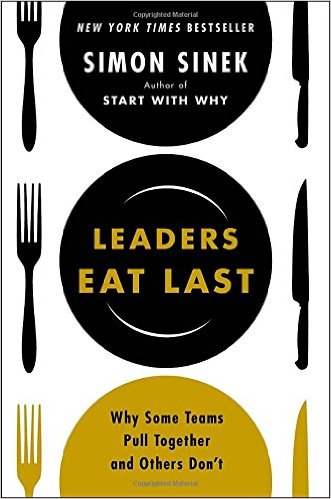
Leaders Eat Last

August 23, 2016

Leaders Eat Last
Author: CCC Show Mentions Prominent
Series: Alden Mills
Tags: Business, Jan's Favorites, Leadership, Recommended Books
ASIN: 1591845327

The New York Times-bestselling follow-up to Simon Sinek's global hit, Start With Why.

Why do only a few people get to say “I love my job”? It seems unfair that finding fulfillment at work is like winning a lottery; that only a few lucky ones get to feel valued by their organizations, to feel like they belong.

Imagine a world where almost everyone wakes up inspired to go to work, feels trusted and valued during the day, then returns home feeling fulfilled.

This is not a crazy, idealized notion. Today, in many successful organizations, great leaders are creating environments in which people naturally work together to do remarkable things.

Buy from Amazon
About the Book

In his travels around the world since the publication of his bestseller Start with Why, Simon Sinek noticed that some teams were able to trust each other so deeply that they would literally put their lives on the line for each other. Other teams, no matter what incentives were offered, were doomed to infighting, fragmentation and failure. Why?

The answer became clear during a conversation with a Marine Corps general.

“Officers eat last,” he said.

Sinek watched as the most junior Marines ate first while the most senior Marines took their place at the back of the line. What’s symbolic in the chow hall is deadly serious on the battlefield: great leaders sacrifice their own comfort—even their own survival—for the good of those in their care.

This principle has been true since the earliest tribes of hunters and gatherers. It’s not a management theory; it’s biology. Our brains and bodies evolved to help us find food, shelter, mates and especially safety. We’ve always lived in a dangerous world, facing predators and enemies at every turn. We thrived only when we felt safe among our group.

Our biology hasn’t changed in fifty thousand years, but our environment certainly has. Today’s workplaces tend to be full of cynicism, paranoia and self-interest. But the best organizations foster trust and cooperation because their leaders build what Sinek calls a Circle of Safety that separates the security inside the team from the challenges outside.

The Circle of Safety leads to stable, adaptive, confident teams, where everyone feels they belong and all energies are devoted to facing the common enemy and seizing big opportunities.

As he did in Start with Why, Sinek illustrates his ideas with fascinating true stories from a wide range of examples, from the military to manufacturing, from government to investment banking.

The biology is clear: when it matters most, leaders who are willing to eat last are rewarded with deeply loyal colleagues who will stop at nothing to advance their leader’s vision and their organization’s interests. It’s amazing how well it works.

Other Books on the Show in the "Alden Mills"
Ishmael:A Novel
Disclosure of Material Connection: Some of the links in the page above are "affiliate links." This means if you click on the link and purchase the item, I will receive an affiliate commission. I am disclosing this in accordance with the Federal Trade Commission's 16 CFR, Part 255: "Guides Concerning the Use of Endorsements and Testimonials in Advertising."
Creativity, Inc.
The Fifth Discipline: The Art and Practice of...

Related Posts

  • TLP192: Dan Pink (Part I/III): Don’t rely on willpower and fortitude – change the architecture
  • Inaugural Blog Post
  • TLP504: Why Your Team Is Still Disengaged
  • TLP382: The Power of Conscious Connection with Talia Fox
  • TLP501: Failure as Fuel: When to push through and when to quit
iTunes
Spotify
Audible
SoundCloud
iHeartRADIO

Instagram Feed

westudyleaders

#leadership #leadershiptraining #leader #westudyleaders

One question. Ask it every day. Tom Rath says the One question. Ask it every day.Tom Rath says the best leaders track one thing: what conversation did I start today that helped someone grow?It sounds small but it builds a career of impact.And Tom's reminder hits hard. You don't always get tomorrow.Listen to the full episode with Tom Rath now. https://bit.ly/TLP-YT-523?utm_campaign=coschedule&utm_source=instagram&utm_medium=westudyleaders#tomrath #leadershippodcast #leadershipmindset #dailyhabits #peopledevelopment #executivecoaching #purposeatwork #leadershipdevelopment
Patrick Ryan names the practice most leaders never Patrick Ryan names the practice most leaders never do. Before you decide. Before you send that email. Before you justify it to yourself. Take a step back. Ask: What would a knowledgeable, impartial observer think of this? That's the impartial spectator. It's not philosophy. It's a daily tool. One question. Applied consistently. It changes everything.Watch the full episode. https://bit.ly/TLP-YT-519?utm_campaign=coschedule&utm_source=instagram&utm_medium=westudyleaders#leadership #ethics #decisionmaking #adamsmith #leadershippodcast #corporateethics #executiveleadership #virtuouscapitalism
Strong conviction can help a leader make bold deci Strong conviction can help a leader make bold decisions. But conviction can also make it harder to recognize when an idea needs to change.Ron Johnson reflects on his experience at J.C. Penney and acknowledges that he held too tightly to his original vision.Leadership isn't about being right every time. It also requires the humility to recognize when you were wrong and learn from it.#Leadership #LeadershipDevelopment #LeadershipLessons #LeadershipMindset #DecisionMaking #HumilityInLeadership #TheLeadershipPodcast
Here's a framework worth borrowing from David Crai Here's a framework worth borrowing from David Craig, former CEO of Refinitiv.Meeting overload isn't the actual problem. It's a symptom of unclear ownership.When it isn't obvious who owns a decision or a budget, people default to scheduling a meeting to sort it out. David solved this at Refinitiv by documenting exactly who owns what, a reference guide his team nicknamed the Blue Book.He also questioned a habit most companies never examine: why every meeting defaults to 60 minutes. His team ran 25-minute meetings instead, built around what the meeting actually needed.Two practical ideas any leader can apply this week.Full conversation is live now https://bit.ly/TLP-YT-525?utm_campaign=coschedule&utm_source=instagram&utm_medium=westudyleaders#leadership #davidcraig #meetingculture #businessefficiency #leadershippodcast #organizationalculture #executiveleadership #productivitytips
Most leaders blame the market, the deal, or the te Most leaders blame the market, the deal, or the tech when things fall apart.David Craig says look closer. The system is usually the real problem.David is the former CEO of Refinitiv and author of the Blue Book on business transformation and growth, having led a 25,000-person company through the financial crisis, Brexit, and Covid.This episode breaks down how to spot complexity killing your organization before it's too late, and what real conviction looks like when leading people through change.New episode is live now. https://bit.ly/TLP-525?utm_campaign=coschedule&utm_source=instagram&utm_medium=westudyleadersWatch it on YouTube - https://bit.ly/TLP-YT-525?utm_campaign=coschedule&utm_source=instagram&utm_medium=westudyleaders#leadership #leadershippodcast #theleadershippodcast #businesstransformation #executiveleadership #organizationalculture #changemanagement #ceointerview #leadershipdevelopment #davidcraig
When Hurricane Helene destroyed David Gray's facil When Hurricane Helene destroyed David Gray's facilities, he didn't panic.He built a playbook.Step one: Know if your people are safe and what they need. Step two: Assess your operations for damage or compromise. Step three: Communicate with customers about impact and timeline. Step four: Keep everyone informed of progress, even if you don't have all the answers yet.David learned that people don't need you to be perfect. They need you to be clear and consistent.Listen to the full episode for his complete crisis leadership framework. https://bit.ly/TLP-YT-520?utm_campaign=coschedule&utm_source=instagram&utm_medium=westudyleaders#crisisleadership #leadership #leadershiplessons #teamculture #management #podcast #davidgray #theleadershippodcast
Chasing the next promotion isn't the same as chasi Chasing the next promotion isn't the same as chasing the next skill.David Craig watched talented people burn years climbing a ladder instead of building capability, and he says it's one of the costliest mistakes in a career.The shift is simple: choose the work that develops you, not just the title that impresses others.Hear David explain the lesson behind it in episode 525. https://bit.ly/TLP-525?utm_campaign=coschedule&utm_source=instagram&utm_medium=westudyleaders#leadership #davidcraig #careeradvice #leadershipdevelopment #leadershippodcast #careergrowth #executivecoaching #professionaldevelopment
Hitting a wall doesn't always mean you have failed Hitting a wall doesn't always mean you have failed.Sometimes it tells you something about the limits of your current approach. The question is what you do next. Reconsider the vision, the people around you, the resources, or the path itself.Sometimes the wall is information.#Leadership #LeadershipMindset #LeadershipLessons #Adversity #Failure #DecisionMaking #TheLeadershipPodcast
Ever wonder why founders can't step away? Patrick Ever wonder why founders can't step away?Patrick Emmons has an answer.He built and sold three companies, and the pattern was always the same.Businesses fail to scale when there's no bench.No corporals, no sergeants, just one general running to the front.Watch the full episode to hear Patrick break down what leadership at every level actually looks like. https://bit.ly/TLP-YT-524?utm_campaign=coschedule&utm_source=instagram&utm_medium=westudyleaders#leadership #leadershipdevelopment #entrepreneurship #teambuilding #scalingbusiness #executiveleadership #businessgrowth #patrickemmons
Most leaders delay hard conversations. They hope t Most leaders delay hard conversations.They hope the problem fixes itself.Patrick Emmons says that hope is the mistake.Waiting doesn't soften the issue, it just adds interest.Listen to the full episode for Patrick's approach to difficult conversations. https://bit.ly/TLP-524?utm_campaign=coschedule&utm_source=instagram&utm_medium=westudyleaders#leadership #difficultconversations #executivecoaching #leadershipdevelopment #directcommunication #teamculture #accountability #patrickemmons
Patrick Ryan reframes the entire capitalism conver Patrick Ryan reframes the entire capitalism conversation in one sentence. Most leaders see ethics as a constraint. A tax on profit. But that's the opposite of how markets actually work. Without moral foundation, there's no trust. No enforceable contracts. No real market. Just extraction dressed up as business. This changes how you think about your next decision.Listen to Episode 519. https://bit.ly/TLP-519?utm_campaign=coschedule&utm_source=instagram&utm_medium=westudyleaders#capitalism #ethics #leadership #adamsmith #businessethics #moralcapitalism #leadershippodcast #virtuouscapitalism
Experience is invaluable. Until it convinces you t Experience is invaluable. Until it convinces you that you don't need to question yourself.David Robson calls this the curse of expertise. The more experience we accumulate, the easier it can become to trust our instincts without looking for evidence that might prove us wrong.His advice is simple: listen to your intuition, but interrogate it like any other piece of data.Ask yourself: What would I need to know to disprove what I believe to be true?That question may be one of the most useful habits an experienced leader can develop.#leadership #leadershipdevelopment #decisionmaking #cognitivebias #executiveleadership #selfawareness #davidrobson #leadershippodcast
Culture isn't something you mandate from the C-sui Culture isn't something you mandate from the C-suite. It's built by the people doing the work.David built Fed Up Foods on this principle, and it's why his team stayed committed through disruption, crisis, and rapid growth.When you invite people to shape how you work together, they own it. When you tell them how to work, they comply.The difference is everything.Listen to David's full framework for culture-building that lasts. https://bit.ly/TLP-520?utm_campaign=coschedule&utm_source=instagram&utm_medium=westudyleaders#culturebuilding #leadership #teamculture #leadershipdevelopment #westudyleaders #peopleirst #theleadershippodcast #valuesdriven
Belonging is more than being part of a team or org Belonging is more than being part of a team or organization. It is the sense that people matter, that they are cared for, and that there is a place for them in the group.For leaders, creating that environment is part of the responsibility of leadership. It shapes how people connect, participate, and contribute.Listen to the full conversation on Tribalism, Belonging, and the Leader's Role. Link in the first comment.#Leadership #LeadershipDevelopment #LeadershipLessons #OrganizationalCulture #Belonging #TheLeadershipPodcast
Chasing success can quietly become the problem, no Chasing success can quietly become the problem, not the solution.Tom Rath argues usefulness matters more than achievement, and the shift changes how you spend every hour of your day.It's a simple reframe with a big payoff: less hamster wheel, more contribution.Listen to Tom Rath's full conversation on the show. https://bit.ly/TLP-523?utm_campaign=coschedule&utm_source=instagram&utm_medium=westudyleaders#tomrath #leadershippodcast #purposeoverperformance #leadershipmindset #executivecoaching #findingpurpose #workplaceculture #meaningfulwork
You've been thinking about bravery all wrong. It's You've been thinking about bravery all wrong. It's not a trait you're born with. It's a skill you build. Jill Schulman is a Marine Corps veteran, keynote speaker, and bravery scientist with a master's in positive psychology from UPenn. This episode breaks down the myths holding you back, the science of the comfort trap, and the exact three-stage framework to push your team toward extraordinary performance. Discover what builds real courage. https://bit.ly/TLP-518?utm_campaign=coschedule&utm_source=instagram&utm_medium=westudyleadersWatch it on YouTube - https://bit.ly/TLP-YT-518?utm_campaign=coschedule&utm_source=instagram&utm_medium=westudyleaders#bravery #leadershipdevelopment #personalgrowth #stoicism #positivepsychology #westudyleaders #theleadershippodcast #fearless #coachinglife #leadershiplessons
You have two deaths, not one. The first is physic You have two deaths, not one.The first is physical. The second is the last time someone says your name.Tom Rath says legacy isn't about what you build or leave behind. It's about what quietly outlives you in someone else's habits.You may never see the moment your influence shows up in someone else's life. That's the point.Listen to the full episode with Tom Rath now. https://bit.ly/TLP-YT-523?utm_campaign=coschedule&utm_source=instagram&utm_medium=westudyleaders#tomrath #leadershippodcast #legacyleadership #purposeatwork #leadershipmindset #executivecoaching #meaningfulwork #leadershipdevelopment
There is a difference between improving what alrea There is a difference between improving what already exists and imagining what could exist.Ron Johnson reflects on what Steve Jobs saw in him: not only someone who understood retail and customers, but someone willing to imagine something that hadn't been done before.Innovation often begins with the willingness to think beyond the familiar.#Innovation #Leadership #SteveJobs #RonJohnson #ThinkDifferently #InnovationLeadership #LeadershipLessons #TheLeadershipPodcast
Steve Jobs is often remembered for his vision. Bu Steve Jobs is often remembered for his vision.But vision was not enough.After being pushed out of Apple, Jobs had to learn something he had not fully understood before: building a great product and building a successful business are two different things.He had to learn to listen to people who disagreed with him. To understand the market. To trust people with responsibilities outside his own expertise. And to recognize when persistence was becoming stubbornness.That period of failure and uncertainty may have been just as important to his leadership as the successes that came later.In this episode of The Leadership Podcast, Geoffrey Cain joins us to explore what Steve Jobs learned during those wilderness years, and why the lessons extend well beyond one famous leader.Sometimes the wall in front of us isn't failure. It's information about what needs to change.#Leadership #LeadershipDevelopment #SteveJobs #LeadershipLessons #VisionaryLeadership #LeadershipMindset #BusinessLeadership #Adversity #DecisionMaking #TheLeadershipPodcast
Donnie Boivin doesn't work the room. He plants his Donnie Boivin doesn't work the room.He plants his feet and lets the room come to him.He calls it command presence, and it's a leadership skill, not a personality trait. The best leaders aren't controlling every conversation, they're guiding the room just by how they show up.Hear Donnie break down what that actually looks like in practice. Full episode is live now. https://bit.ly/TLP-YT-521?utm_campaign=coschedule&utm_source=instagram&utm_medium=westudyleaders#leadership #networking #executivepresence #personalbranding #leadershipdevelopment #salesleadership #leadershippodcast #businessgrowth
Follow on Instagram

Recent Posts

  • TLP534: What If You’re Wrong?
  • TLP533: What CEOs and Young Graduates Can Teach Each Other
  • TLP532: Sheer Will: The Unlikely Path from Cuba to the Cabinet
  • TLP531: Tribalism, Belonging, and the Leader’s Role
  • TLP530: Leadership Lessons from Building the Apple Store with Ron Johnson

Recent Comments

  • Anonymous on TLP519: The Leadership Idea We Missed for 250 Years
  • Anonymous on TLP513: The Leadership Cost of Isolation with Nick Black
  • Anonymous on TLP511: What 500 Top Leaders Taught Us — And Why It’s Not What You Think
  • Anonymous on TLP508: Your Scars Are Your Resume
  • Anonymous on TLP505: Why Leadership Coaching So Often Fails

Tags

adaptability assumptions athletics business change coaching communication corporate crucible culture Curiosity decision making education emotional intelligence entrepreneur Executive Coaching financial history humor innovation interview Jan Rutherford Jim & Jan Jim Vaselopulos leader leadership leadership development Leadership Podcast military neuroscience Personal Growth philosophy practitioner productivity relationships resilience speaker sports stories team development teamwork thought leader trust veterans workplace culture

Copyright © 2026 Rafti Advisors, LLC & Self-Reliant Leadership, LLC - All Rights Reserved. | Privacy Policy